OSAID — a hit to the open source initiative
FOSS is an incredibly valuable approach to software development. Code is THE intellectual property that rules the world today. Making it available to the…
Datafund 4 min read
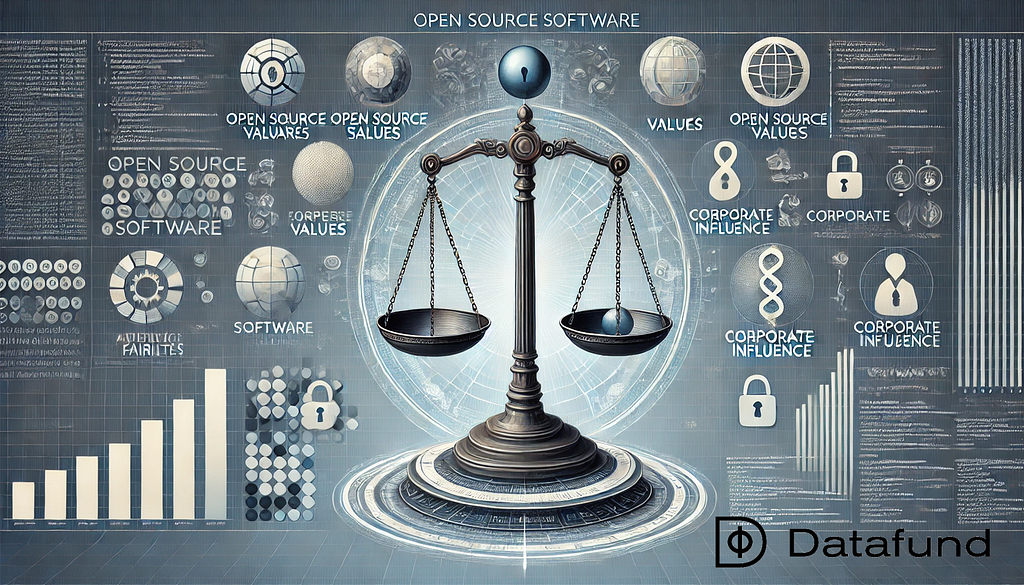 Source: Dall-E, Datafund
FOSS is an incredibly valuable approach to software development. Code is THE intellectual property that rules the world today. Making it available to the widest possible circle of people has proven to be one of the fairest, most efficient and controlled approaches to software development. Because open source code is always seen by millions of people, it has become a “trusted brand” around the world.
Tainted and premature definition
With the release of Open Source AI Definition (OSAID) on 28 October, the Open Source Initiative has put a large dent into that trust. Bradley M. Kuhn, a Policy Fellow of the Software Freedom Conservancy, wrote a scathing critique on OSAID that can be summarised in six points:
1. Reproducibility Requirements:
- The OSAID fails to require public reproducibility of the AI system building process
2. Premature Release:
- It took decades of industry experience and community discussion to come to the original Open Source Definition (OSD)
3. Corporate Influence:
- The process appeared susceptible to regulatory capture by industry interests and the definition appears to have been engineered to retrofit existing commercial systems
4. Community Exclusion:
- The drafting process lacked input from artists, writers, actors, musicians, and other creative professionals whose works are used in AI training sets.
5. Political Compromise:
- OSI made decisions based on what existing AI systems could do, not on ideal principles. This compromised approach favoured vested interests who would benefit financially from their systems being declared “open source”. There is no leverage with which to remove the OS badge once it’s claimed.
6. Training Data Issues:
-
The definition fails to adequately address the complex relationship between code and training data in AI systems.
-
The traditional separation between proprietary data and open source code doesn’t translate well to AI systems.
-
Questions about training set licensing and availability remain unresolved.
The OS designation is a boon to the corporations
The way the OSAID has been framed, it creates the impression that OSI set out to appease their corporate backers such as Amazon, Meta, Google and others. At first sight it seems quite absurd that the world’s biggest closed source systems would even be funding OSI’s work. Not so much when you look at how much they stand to gain from it and from influencing the process of defining open source standards for AI. These companies are eager to benefit from the credibility of the open source label while maintaining control over the most crucial aspects of their AI systems — the training data and reproducibility processes.
A dangerous precedent
This situation creates a dangerous precedent where the “open source” designation might become merely a marketing tool rather than a genuine commitment to transparency and community-driven development. The OSAID, in its current form, risks undermining decades of progress in the open source movement by diluting its core principles to accommodate commercial interests.
At Datafund, we have always been fierce proponents of OS. We believe that it is one of the best communal developmental efforts on a global scale. And it should remain guarded from corporate capture to maintain its credibility.
Until fundamental issues are addressed, particularly around training data transparency and reproducibility, the OSAID may do more harm than good to the open source community’s long-standing values and reputation. Especially in the field of AI, with its enormous potential impact on the future of humanity. AI must be open and accessible to all to ensure the widest possible benefit to the larger society. OS is key in that endeavour.
If you liked this content, keep following us for more on:
X
or get in touch via:
[email protected]
OSAID — a hit to the open source initiative was originally published in Datafund on Medium, where people are continuing the conversation by highlighting and responding to this story.
First published on Medium on 2024-11-12.