A year in review: Datafund as a Swarm 2.0 node operator
It’s been a year since we at Datafund first wrote about our experience as a Swarm node operator. In this blog, we’ll review the Swarm network’s evolution…
Datafund 3 min read
 Source: Datafund
It’s been a year since we at Datafund first wrote about our experience as a Swarm node operator. In this blog, we’ll review the Swarm network’s evolution over the past year and its impact on node operators. Let’s dive in.
Swarm’s leap towards greater decentralisation
2023 saw Swarm undergo major upgrades. In autumn, the Swarm Foundation introduced a decentralised price oracle, setting a new standard in storage pricing. Now, storage costs are determined solely by real-time supply and demand, making Swarm the only storage network that is decentralised in every technical aspect.
On 26 March 2024, the network transitioned to version 2.0, implementing erasure codes to vastly increase data availability, enhancing security with stronger encryption, and streamlining the network’s testing environment.
Another recent major change for the network was the decision, backed by a majority community vote, to shutdown the bonding curve. This changed the tokenomics of its BZZ token to a traditional market-based one.
New advantages of being a Swarm 2.0 node operator
 Source: Swarmscan
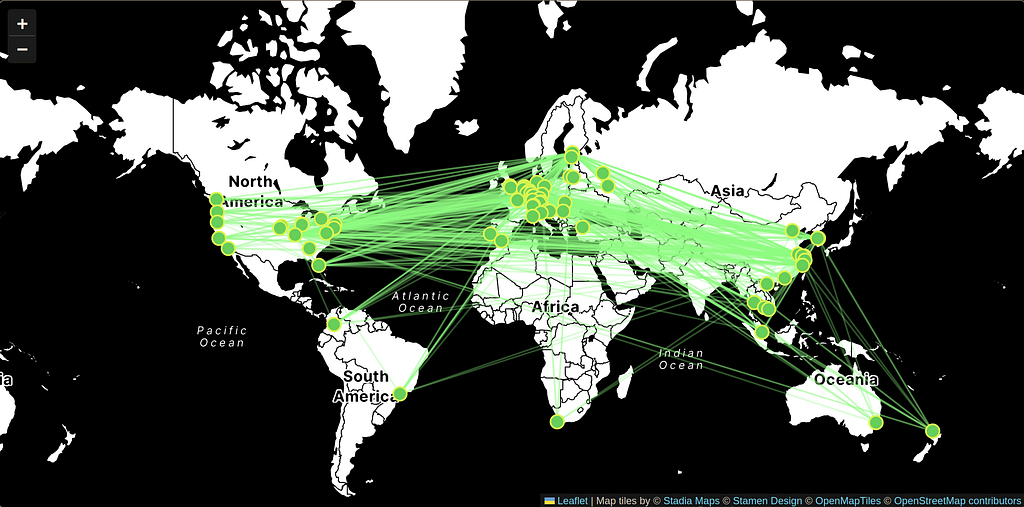
All these changes have had a notable impact on being a node operator. Since our last blog on this subject, the Swarm network more than tripled in size to approx. 15,000 nodes and its depth (the amount of available storage) doubled three times already. Such positive network development encouraged us to increase the size of our node cluster, just as we announced in our previous blog post.
While a bigger network means more competition for rewards, it also means that rewards are now larger (dependent also on the token price fluctuation). To be more precise, every 15 minutes around 30 BZZ are paid out to one of the node operators. That’s four times more than last year! Additionally, node operators can strategically choose less populated logical neighbourhoods to increase their chances of winning the reward.
Building a fair data economy in the era of AI
As we stand on the brink of an AI-fuelled future, we see the role of a Swarm node operator giving us a unique advantage. By being embedded inside this innovative Web3 storage network we can offer products that are completely aligned with the spirit of a fair data economy.
Anyone using Datafund’s solutions will be able to privately store and offer their unique, verified datasets to the burgeoningAI industry, while being fairly compensated for the effort. We see this as the cornerstone of a fair data economy where privacy, data ownership and active management of one’s data are valued and serve as a linchpin of an equitable digital society.
Follow us on:
X
or get in touch via:
[email protected]
A year in review: Datafund as a Swarm 2.0 node operator was originally published in Datafund on Medium, where people are continuing the conversation by highlighting and responding to this story.
First published on Medium on 2024-05-17.